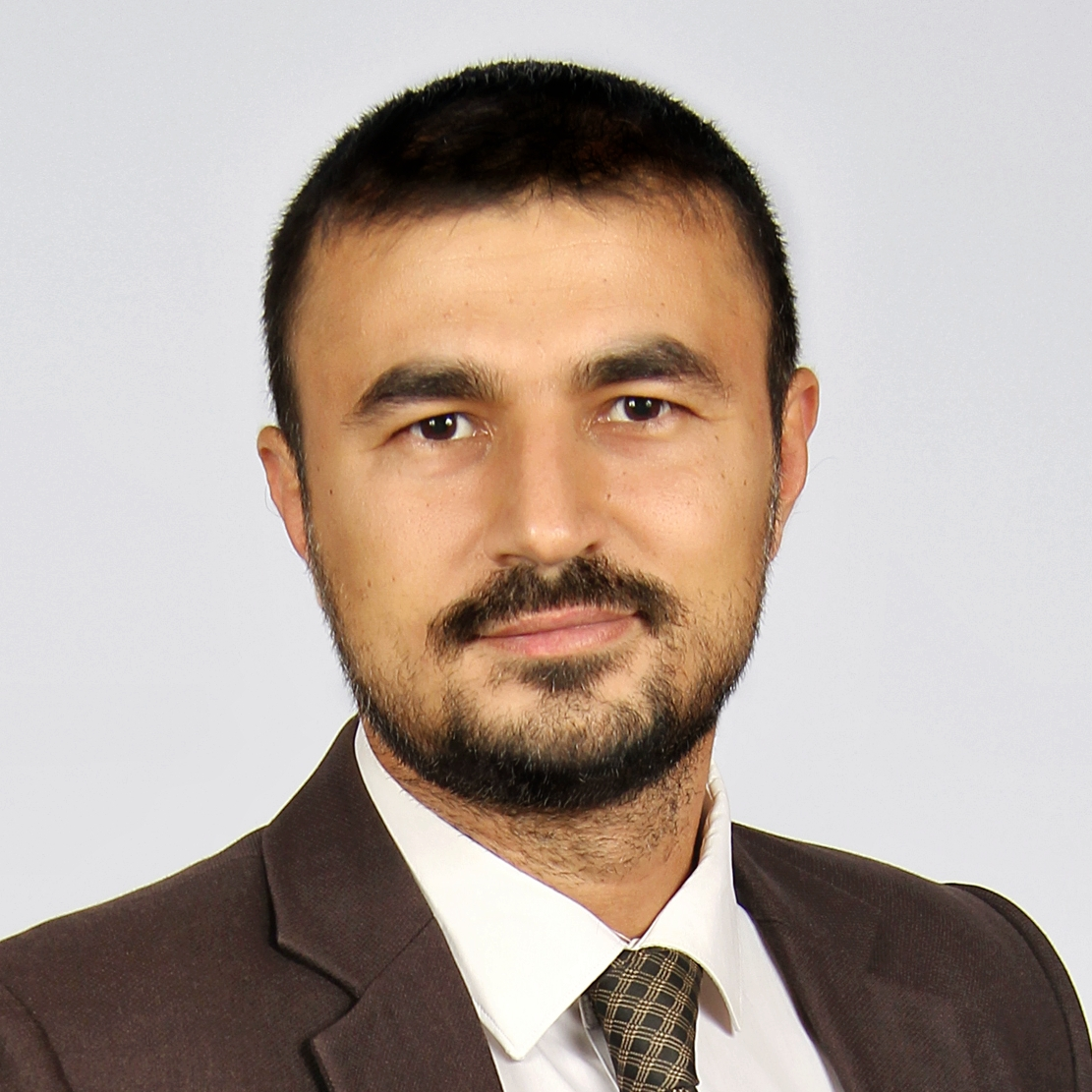
I am Sergey Konyashin, a former Russian diplomat, journalist and researcher. For nearly eleven years I served in the Russian Ministry of Foreign Affairs, at the embassies in Yemen, Sudan and Algeria and at the Middle East department in Moscow. Before the diplomatic service I worked in Russian state television. I resigned from the Ministry in 2021 and left Russia in 2022.
I live in Haifa, Israel, where I am a doctoral researcher in communication studies at Ariel University. Démarche is my journal on Russian foreign policy in the Middle East and Africa. It is written and run by me alone, and the views here are mine.
Early years and education
I was born on 26 August 1983 in Gulkevichi, Krasnodar Region, in the family of a naval officer and a schoolteacher. My first school year was in Murmansk-130, a closed military town and secret base of the Soviet submarine fleet in the Arctic, where my father served. In 1992 the family moved to Novorossiysk, on the Black Sea, and I finished School No. 20 there in 2000 with a gold medal.
The same year I entered the Faculty of International Journalism at MGIMO, the Moscow State Institute of International Relations, and graduated in 2005 as an international journalist with Arabic and English. During those years I interned at the ITAR-TASS news service and wrote as a freelance correspondent for Ogonyok and Moskovskie Novosti, the leading independent titles of the post-Soviet press and, in the years before Putin, the standard of what a free Russian newspaper could be. I also took part in expeditions to the Solovetsky Islands, editing the almanac Tishina Solovkov. I have been a member of the Union of Journalists of Russia since 2003.
From 2005 to 2008 I studied in the postgraduate programme in sociology at MGIMO. My research there was on social stereotypes and the ways television shapes public opinion. It later became the basis of two monographs.
Television, 2005–2010
My first job after graduation was at Zvezda, the television channel of the Russian Ministry of Defence, where I worked as a correspondent from 2005 to 2006. I reported from military sites that had been closed to the press until then, among them the 7th Airborne Division and the naval base in Novorossiysk, and was one of the first journalists to film the transfer of part of the Black Sea Fleet from Sevastopol to Novorossiysk.
In 2006 I moved to Channel One, the main state television network in Russia, as an editor in its news department. For four years I edited correspondents’ reports for Vremya, the flagship news and analysis programme of the most influential federal channel in the country, and for its other news bulletins, voiced special reports on international events and produced television projects of my own. These were the years when Russian state television was being turned into an instrument of the Kremlin, and I saw that process from inside the newsroom. I left television in 2010 for the diplomatic service.
Diplomatic service, 2010–2021
I joined the Russian Ministry of Foreign Affairs in 2010 and served for nearly eleven years, at three embassies in the Arab world and at the Middle East department in Moscow.
My first posting was the embassy in Sana’a (2010–2013), where I rose from secretary-assistant to attaché and served as deputy consul and spokesperson. My daily work was reporting: papers on the political process, the parties and movements, the military situation and the economy of Yemen at the time of the Arab Spring. In 2011, in the first phase of the civil war, I took part in the evacuation of the Russian community from Sana’a and Aden. I also prepared the sessions of the Russian-Yemeni intergovernmental commission in 2012 and 2013 and secured the release of a Russian citizen who had been detained by the Yemeni security services on a false suspicion of links to Al-Qaeda.
Between postings I worked at the Middle East and North Africa Department of the Ministry (2013–2014), in the section responsible for Bahrain, Saudi Arabia and Yemen, with the ranks of attaché and third secretary. I prepared visits, talks and briefing papers for the leadership of the Ministry and coordinated the security of the embassy in Yemen during the next stage of its evacuation.
In Khartoum (2014–2018) I was third, then second secretary, and combined the duties of political officer, consul, cultural attaché and spokesperson of the embassy. I was responsible for the conflict areas of Sudan, displaced persons and human rights, and took part in field missions of the UN Security Council committee on Darfur. I organised the sessions of the Russian-Sudanese intergovernmental commission in 2015, 2016 and 2017, handled the visit of the Russian foreign minister to Sudan in 2014, and worked on the release of two Russian hostages kidnapped in Darfur in 2015. I also lectured on Russian history and literature at the University of Khartoum.
My last posting was Algiers (2019–2021), where I headed the consular section of the embassy with the rank of second secretary. I restored consular services for Russian citizens in eastern Algeria, which had been without them since the closure of the consulate general in Annaba in 2016, by setting up mobile consular missions, and introduced an electronic queue for visitors to the section. In April 2021 I returned to Russia and resigned from the service.
Leaving the service and leaving Russia, 2021–2022
I resigned from the Ministry in April 2021 because I no longer wished to serve Putin’s regime: to take part in its foreign policy, which I had come to see as criminal, or in the corruption that ran through the service. At that point I had no plan to emigrate. I wanted to leave the state and settle in my home town, and for a year I lived in Novorossiysk, working as an interpreter and spokesman for Russian Tonnage, an exporter of Russian agricultural produce, and teaching English at a private school.
The invasion of Ukraine on 24 February 2022 changed that. It became clear to me that my family could no longer be safe in Russia and that we had to leave. We could not go at once: my wife was eight months pregnant, and no airline would take her on board. We flew out in May, after our son was born, and landed in Israel on 11 May 2022.
Israel, since 2022
We settled in Haifa. My first year in Israel went into Hebrew, at an ulpan, and into finding work. From 2023 to 2024 I worked at Ham-Let, an American-owned metal-parts factory in the Tziporit industrial zone in Galilee, as assistant to a workshop manager, in charge of supplies, production accounting and the staff transport of the workshop.
In 2024 I entered the doctoral programme at the Moskowitz School of Communication at Ariel University. My research project examines how the Israeli press in Hebrew, English, Russian and Arabic has covered the Russian war against Ukraine, and how each of these presses adapts a foreign war to the frame of its own audience. The subject brings together my two professions: the study of media and the practice of foreign policy.
Démarche
After leaving Russia I began writing about Russian foreign policy for the independent press: The Moscow Times, Republic, The Insider and other outlets, in Russian and in English, and giving interviews on YouTube. By 2025 it was clear that this work needed a home of its own, where it could be collected in one place and reach an English-speaking audience, since until then most of it had existed only in Russian. So in 2025 I started Démarche, my own journal in English. In 2026 Freedom Letters published my book Requiem for the East, on how Russia lost the Arab world.
For nearly eleven years I wrote reports from Russian embassies in the Middle East and Africa for a small circle of readers in Moscow. Démarche is where I keep writing them. The subject is the same: Russian foreign policy in the region, seen from inside the system that makes it. The questions are the same: what is actually happening, who is actually deciding, and what the official language is meant to hide. Only the addressee has changed. It is no longer the Kremlin. It is you.
Démarche is independent. It is written and run by me alone, and the views here are mine. What you will find here:
For the press
I give comments and interviews on Russian foreign policy, on Russia in the Middle East and Africa, on the Russian Foreign Ministry as it works from inside, and on Russian propaganda and state television. On particular countries: Sudan, Yemen, Algeria, and the wider Arab world. Russian is my native language, and I also give interviews in English, which I speak freely, though more plainly. To request an interview or a comment, use the addresses listed under Contact.
My biography. Copy a short biography of the length you need.
50 words
Sergey Konyashin is an analyst of Russian foreign policy in the Middle East and Africa. A former Russian diplomat, he served in Yemen, Sudan and Algeria from 2010 to 2021 and resigned in protest at Putin’s policies. He lives in Israel and is a doctoral researcher at Ariel University.
100 words
Sergey Konyashin is an analyst of Russian foreign policy in the Middle East and Africa and the author of Requiem for the East (Freedom Letters, 2026). He served in the Russian Ministry of Foreign Affairs for nearly eleven years, at the embassies in Yemen, Sudan and Algeria, and resigned in 2021 in protest at Putin’s policies. Earlier he was a news editor at Channel One, Russia’s main state television network. He left Russia in 2022 and lives in Haifa, Israel, where he is a doctoral researcher at Ariel University. He writes for The Moscow Times, Republic and The Insider.
How to introduce me. Choose what fits your audience and the occasion:
analyst of Russian foreign policy in the Middle East and Africa
former Russian diplomat, who served in Yemen, Sudan and Algeria (2010–2021)
doctoral researcher in communication studies at Ariel University, Israel
author of Requiem for the East (Freedom Letters, 2026), on how Russia lost the Arab world
journalist, former editor at Channel One, Russia’s main state television network
Russian émigré living in Israel since 2022
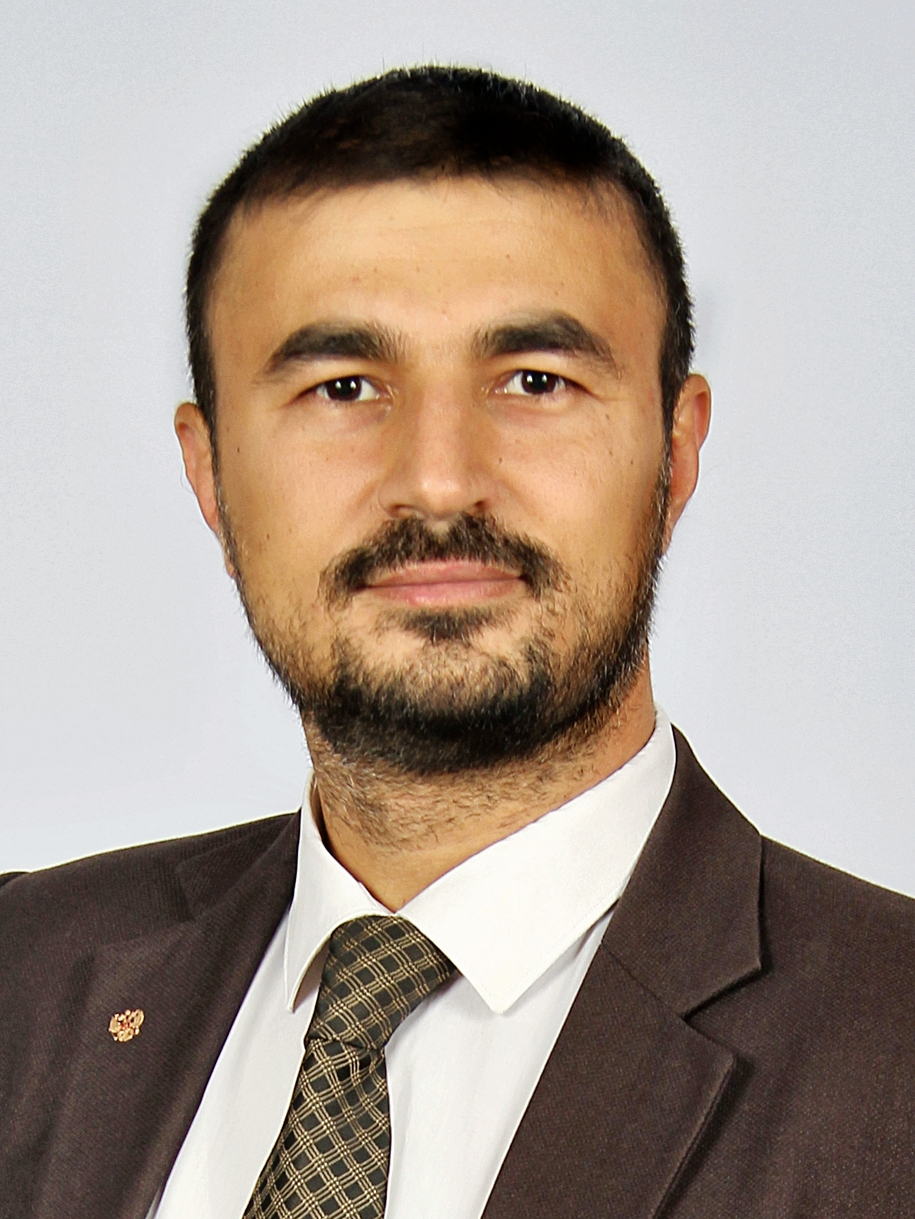
My portrait. You can download my portrait and publish it with or without credit.